Emergency Dentist Treatment Options for Gum Infections
A gum infection can move from mild irritation to a genuine dental emergency faster than most people expect. Patients often assume bleeding gums, swelling, or a bad taste in the mouth can wait until their next routine cleaning. Sometimes they can. Sometimes they absolutely should not. When the infection begins to spread, pain intensifies, chewing becomes difficult, and the risk is no longer limited to a sore spot near one tooth. At that point, seeing an Emergency Dentist is less about comfort and more about stopping a problem that can escalate quickly.
The challenge is that gum infections do not all look the same. One person shows up with a tender, puffy gumline around a wisdom tooth. Another has a localized abscess next to a cracked molar. A third has advanced periodontal disease with sudden swelling and drainage that started overnight. The treatment options overlap, but they are not identical. Good emergency care depends on identifying the source, gauging the severity, and deciding what must be handled immediately versus what can be stabilized and treated in stages.
When a gum infection becomes urgent
Not every inflamed gum requires same-day treatment, but several patterns usually push a case into emergency territory. Significant swelling is one. Pus or a foul-tasting discharge is another. Pain that wakes you up, fever, swollen lymph nodes, or difficulty opening your mouth all raise concern. If the swelling starts to affect swallowing, breathing, or the ability to keep fluids down, that is beyond a routine dental visit and may require urgent medical attention immediately.
In practice, what worries dentists most is not just the gum redness itself, but the possibility that bacteria are trapped in a closed space. Once pressure builds, the infection can spread into deeper tissues. That is why some patients describe a strange pattern: the area starts as a dull ache, then becomes throbbing and tender, then suddenly feels slightly better after drainage appears. That “better” feeling can be deceptive. Drainage may reduce pressure, but the source of infection often remains.
A useful rule is simple. If a gum problem is worsening by the hour rather than the week, emergency assessment makes sense.
What an Emergency Dentist looks for first
At an emergency visit, the dentist’s first job is not to “deep clean the gums” in a generic sense. It is to answer three immediate questions. Where is the infection coming from? How far has it spread? Is there a threat to the tooth, surrounding bone, or the patient’s overall health?
That evaluation usually starts with a close visual exam, periodontal probing in selected areas, and dental X-rays. If a patient has swelling on the outside of the face, the dentist will also assess whether the tissues are firm, fluctuant, warm, or visibly draining. A small pimple-like bump on the gum, often called a sinus tract or gum boil, can indicate chronic drainage from an abscessed tooth or periodontal pocket.
The distinction matters because a gum infection can be primarily periodontal, meaning it starts in the gum and supporting tissues, or endodontic, meaning it originates in the tooth pulp and drains through the gum. To a patient, both can look like “my gum is infected.” To a dentist, they lead to very different treatment paths.
Localized cleaning and debridement
One of the most common emergency treatments is debridement, which means removing plaque, tartar, food debris, and infected material from around the tooth and under the gumline. If the infection is driven by a deep periodontal pocket or trapped debris, cleaning the area thoroughly can dramatically reduce swelling and pain.
This is not the same as a routine polishing. In an emergency setting, the dentist or hygienist may gently irrigate the pocket, scale the root surface, and clear out material that is feeding the infection. When performed on an acutely inflamed site, the goal is not cosmetic cleanliness. The goal is to disrupt the bacterial load and create a pathway for healing.
Patients are sometimes surprised that such a straightforward intervention can bring rapid relief. I have seen cases where a popcorn hull, a fragment of meat fiber, or impacted calculus under the gumline caused days of escalating pain. Once removed, the tenderness dropped within 24 to 48 hours. That said, debridement works best when the infection is localized and the tooth is structurally sound. It is not a cure-all for every swollen gum.
Drainage of a gum abscess
If an abscess has formed, drainage is often the turning point. The pressure inside infected tissue is one reason gum infections hurt so intensely. Releasing that pressure can reduce throbbing almost immediately. Depending on the situation, drainage may occur through the periodontal pocket, through an existing sinus tract, or through a small incision placed in the swollen tissue.
This is one of the most misunderstood parts of emergency dentistry. Antibiotics alone do not reliably solve a contained abscess if the pus has no way to escape. Medication may help slow bacterial spread, but without drainage or removal of the source, the infection often lingers or flares again. Dentists see this pattern regularly in patients who started leftover antibiotics at home and felt briefly improved, only to return with the same swelling days later.
Drainage is usually paired with irrigation and cleaning. If the dentist suspects the abscess is tied to a dead or dying tooth rather than gum disease alone, the next step may shift toward root canal treatment or extraction rather than periodontal therapy by itself.
Antibiotics, and when they actually help
Patients often arrive expecting a prescription and little else. Sometimes antibiotics are appropriate, but they are only one tool. A gum infection that is small, localized, and fully drainable may be managed without systemic antibiotics in an otherwise healthy patient. On the other hand, diffuse swelling, fever, spreading cellulitis, compromised immunity, or involvement of multiple tissue spaces often justifies antibiotic therapy in addition to local treatment.
Dentists usually choose antibiotics based on the suspected bacteria, the patient’s allergy history, medical conditions, and how severe the infection appears. The important point is that antibiotics support the body’s response, they do not replace the need to remove the cause. If a deep pocket remains packed with calculus, or an infected tooth pulp remains untreated, medication may buy time but not resolution.
This is also where judgment matters. Overprescribing antibiotics is poor care. Under-treating a spreading infection is worse. The strongest emergency dentists are careful on both fronts. They prescribe when the clinical picture supports it, and they avoid treating antibiotics as a substitute for actual dental treatment.
Deep periodontal cleaning for active infection
When gum infection stems from periodontal disease, scaling and root planing may be the core treatment. This is often described as a deep cleaning, but the phrase can sound softer than the reality. The dentist or hygienist is cleaning beneath the gumline to remove deposits from root surfaces where bacteria have colonized. Infected pockets can shrink once the irritants are gone, though healing depends on how much attachment and bone support remain.
In an emergency, this treatment may be focused on the acutely affected area first rather than completed throughout the entire mouth in one sitting. That is common and sensible. If one lower molar region is swollen and draining while other areas are stable, the immediate objective is to calm the hot zone, relieve pain, and prevent spread. More comprehensive periodontal treatment can follow once the patient is more comfortable.
There is a practical trade-off here. Deep cleaning can be extremely effective for periodontal abscesses and active gum disease, but if the tooth itself has a poor long-term prognosis, intensive cleaning may only postpone extraction. A good emergency assessment does not just ask, “Can we treat this today?” It asks, “Will this tooth be worth saving after the infection settles?”
Root canal treatment when the “gum infection” starts inside the tooth
A fair number of so-called gum infections are actually tooth infections that have found a drainage path through the gums. The patient may notice a bump near the root, tenderness on biting, or recurring swelling that comes and goes. In those cases, gum treatment alone will not fix the problem because the bacteria are inside the root canal system.
Emergency root canal treatment may be recommended when the tooth is restorable and the infection source is pulpal. During treatment, the dentist opens the tooth, removes infected tissue from the canals, disinfects the space, and places a temporary or final filling depending on the situation. Often, pressure reduction inside the tooth and improved drainage lead to meaningful pain relief.
This distinction is one of the reasons self-diagnosis can go wrong. A patient may brush more aggressively around the swollen gum, use mouthwash constantly, and still worsen, because the infected tissue is not primarily at the gumline. It is inside the tooth.
Extraction when saving the tooth no longer makes sense
There are times when the most effective emergency treatment is removing the tooth. This is not a failure. It is a sound clinical decision when the tooth is too damaged, too loose from advanced periodontal disease, vertically fractured, or associated with an infection that is unlikely to resolve predictably with conservative care.
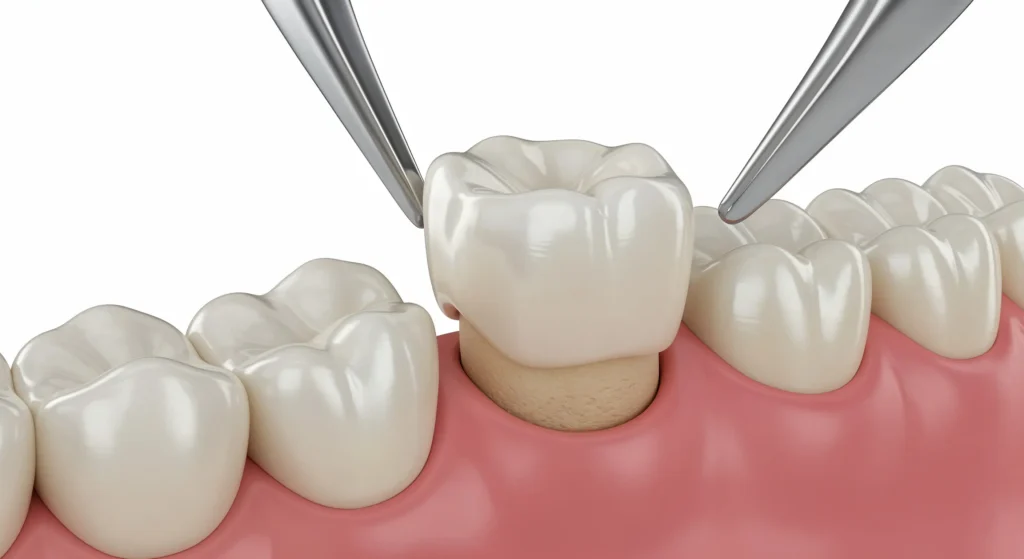
Extraction immediately eliminates one major source of bacteria and can allow infected tissue to drain and heal. For a patient in severe pain, especially with a badly broken molar or advanced gum breakdown, extraction can be the fastest route to relief. The downside, of course, is the long-term consequence of losing the tooth. Replacement planning matters. Depending on the tooth and the patient’s health, options later may include a bridge, removable partial denture, or implant after the infection has fully resolved.
Experienced clinicians do not recommend extraction lightly. But they also know when heroic efforts create more cost and delay than benefit. The right choice is the one that controls infection safely and serves the patient’s long-term oral health, not the one that simply avoids a hard conversation.
Treating gum infections around wisdom teeth
One of the most frequent urgent gum problems appears around partially erupted wisdom teeth, especially lower thirds. The flap of gum over the tooth can trap bacteria and food, leading to a painful condition called pericoronitis. The tissue becomes swollen, red, and tender. Some patients can barely close their teeth together without biting the inflamed gum. Others develop bad breath, limited mouth opening, or swelling into the cheek.
Emergency treatment usually involves careful irrigation beneath the gum flap, cleaning the area, and reducing the immediate bacterial burden. If the swelling is significant or the patient shows signs of spreading infection, antibiotics may be added. The long-term answer, however, is often extraction of the problematic wisdom tooth, or in select cases removal of the overlying gum tissue if the anatomy supports it.
Pericoronitis is a good example of why emergency treatment and definitive treatment are not always the same. Cleaning the area may settle the infection this week. It does not guarantee the problem will stay away next month.
If dental work triggered the gum infection
Not every emergency gum infection arises from neglected gum disease. Sometimes recent dental work plays a role. A temporary crown that traps food, excess cement left below the gumline, an ill-fitting filling edge, or trauma from a restoration can create localized inflammation and infection. These cases often respond well once the mechanical irritant is found and corrected.
I remember a patient who had sharp pain and swelling between two back teeth a few days after receiving a crown. She assumed the crown itself had “failed.” The real culprit was retained cement under the gumline. Once it was removed and the area irrigated, the tissue began settling within days. That kind of case reinforces an important point: a gum infection may be bacterial, but the bacteria often need a niche. Fixing the niche matters.
Pain control during emergency treatment
A practical concern for most patients is whether treatment will hurt. Gum infections can make local anesthesia less predictable because inflamed tissue is acidic and harder to numb fully. A skilled Emergency Dentist anticipates that issue. Sometimes the answer is to numb from a distance through a nerve block rather than injecting directly into the most inflamed area first. Sometimes treatment is staged, with enough intervention to establish drainage and comfort before more extensive care later.
Pain control after treatment typically relies on common anti-inflammatory and analgesic strategies, provided the patient’s medical history allows them. Warm saltwater rinses are often recommended as a supportive measure, not because they cure infection, but because they can soothe tissue and help keep the area cleaner between visits.
Patients do best when expectations are realistic. Proper treatment usually reduces pain, but the area may remain sore for a few days. Tenderness while chewing, slight oozing after drainage, and sensitivity during healing can all be normal. What should improve is the pressure, the throbbing, and the feeling that the infection is actively escalating.
What usually happens after the emergency visit
Emergency care is often phase one, not the whole story. Once the acute infection is controlled, the dentist needs to make sure the cause has truly been addressed. That may mean full periodontal charting, additional deep cleaning, root canal completion, extraction follow-up, or referral to a periodontist or oral surgeon.
A short follow-up interval is common, especially when the original swelling was pronounced. Dentists want to confirm that tissue is shrinking, drainage has stopped, and the patient is regaining function. If improvement is not tracking as expected, the diagnosis may need reconsideration. A “simple gum infection” that does not respond may actually involve a cracked root, a hidden vertical fracture, retained foreign material, or a deeper anatomical issue.
Here is a practical set of signs that should prompt urgent reassessment after treatment:
- Swelling is increasing rather than decreasing after 24 to 48 hours.
- Fever develops, or you feel generally unwell.
- Swallowing, breathing, or mouth opening becomes harder.
- Pain becomes more severe despite treatment and medication.
- There is persistent heavy bleeding or a bad taste with worsening pressure.
What patients can do at home while waiting to be seen
Home care cannot replace emergency treatment, but it can prevent things from getting worse during the wait for an appointment. The biggest mistake is often aggressive self-treatment. People jab the area with floss picks, rinse with harsh products repeatedly, or place aspirin directly on the gum, which can burn tissue.
A safer short-term approach usually includes the following:
- Rinse gently with warm saltwater a few times a day.
- Keep the area as clean as comfort allows with soft brushing.
- Avoid smoking, which slows healing and aggravates inflammation.
- Stay hydrated and choose softer foods if chewing is painful.
- Use over-the-counter pain relief only as directed and only if medically appropriate for you.
If facial swelling is visible, a cold compress on the outside of the face can help with comfort, though it will not resolve the infection itself.
Why timing changes the treatment options
One of the clearest patterns in emergency dentistry is that early infections offer more conservative choices. A small periodontal abscess caught quickly may need little more than debridement, drainage, and follow-up cleaning. Wait a week or two while swelling worsens, and the same area may involve more tissue destruction, more pain, a course of antibiotics, and a tooth with a poorer prognosis.
That timing issue affects cost, complexity, and outcome. It can be the difference between preserving a tooth and extracting it. It can also be the difference between a same-day dental visit and a trip to an urgent care center or hospital. For people with diabetes, immune suppression, or a history of severe infections, the margin for waiting is even smaller.
Dentists are not trying to dramatize gum infections when they urge prompt care. They have simply seen how quickly a manageable problem can become a serious one.
Choosing the right emergency provider
Not every office handles acute gum infections with the same speed or scope. Some general dental practices reserve time for emergencies daily. Others may triage by phone and refer complex swelling elsewhere. What matters most is access to prompt evaluation, imaging when needed, and a clinician who can distinguish between periodontal, endodontic, and surgical causes.
When calling, patients should describe symptoms clearly: where the swelling https://cruzksnt304.publishlane.com/posts/what-an-emergency-dentist-can-do-for-a-split-tooth is, whether there is pus, whether they have fever, whether they can swallow normally, and whether the tooth feels high, loose, or painful to bite on. That information helps the office prioritize urgency and prepare the right treatment slot.
A capable Emergency Dentist does more than hand out medication. They identify the source, relieve pressure, reduce infection, and map the next step. Sometimes that next step is saving the tooth. Sometimes it is removing it. Either way, good emergency care turns a painful, uncertain situation into a controlled one, which is exactly what gum infections require.
Simple Dental South Gate
Address: 8617 California Ave, South Gate, CA 90280
Phone number: +13236896118
FAQ About Emergency Dentist Southgate CA
What can the ER do for a tooth?
The emergency room can provide temporary symptom relief for a bad tooth, such as prescribing pain medicine or antibiotics, but it cannot fix the actual dental problem.
What is the 3-3-3 rule for tooth infection?
The 3-3-3 rule for a toothache or infection typically means taking three 200 mg ibuprofen tablets (600 mg total) three times a day for no more than three days to control pain and swelling while waiting to see a dentist.
What do you do if you have a dental emergency but no dentist?
If you have a dental emergency and no regular dentist, you should search for an urgent care dental clinic, call local walk-in dental offices, or go to a hospital emergency room if you have severe bleeding, swelling, or trouble breathing.