Can Veneers Be Removed? Understanding Your Options
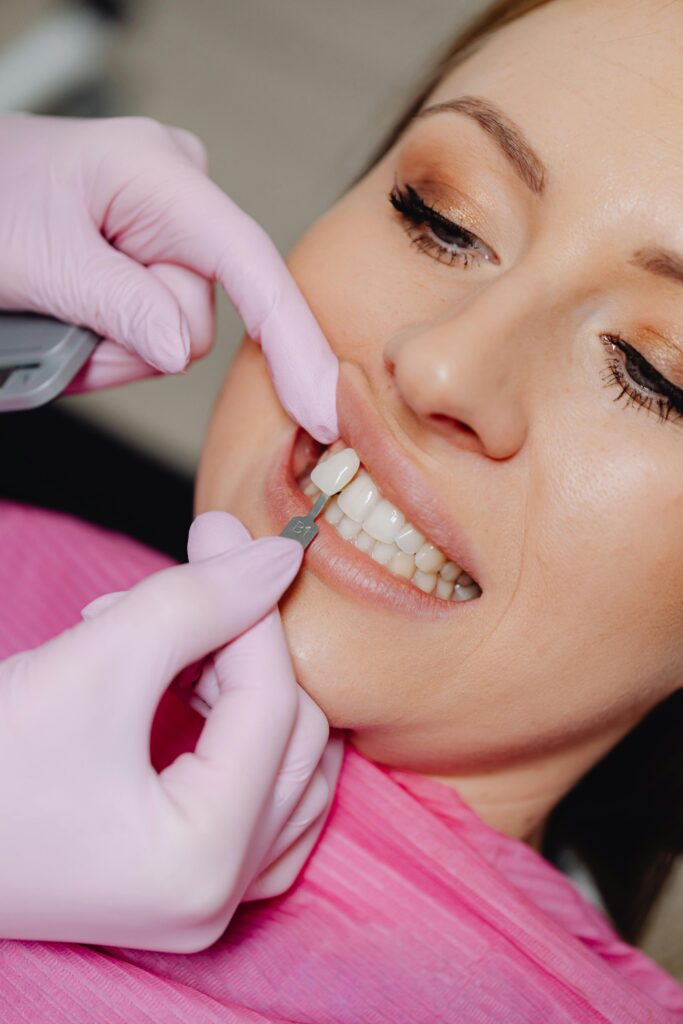
A patient usually asks this question in one of two moods. The first is curiosity: If I ever change my mind, can I go back? The second is regret: I do not like how these look, and I want them off. Both are understandable, and both deserve a careful answer.
The short version is yes, veneers can be removed. The more important answer is that removal is rarely as simple as taking off a cosmetic cover and returning the tooth to its original state. In many cases, especially with traditional porcelain veneers, some natural enamel was reshaped before the veneer was bonded in place. That means the tooth underneath may no longer be exactly as it was before treatment. Once the veneer comes off, the tooth often still needs protection and a new restoration.
That distinction matters. People often use the word “remove” as if it means “undo.” In dentistry, those are not always the same thing.
What veneers actually are, and why removal is different from reversal
Veneers are thin shells placed on the front surface of teeth to improve color, shape, size, or alignment appearance. They are commonly made from porcelain or composite resin. Both can create beautiful results, but they behave differently over time and when replacement becomes necessary.
Porcelain veneers are generally stronger, more stain resistant, and longer lasting. They are also bonded very securely to the enamel. That bond is one reason they look natural and function well, but it also means removal requires precision. A dentist cannot simply peel one off like a temporary nail cover. The veneer is usually sectioned or ground away in a controlled way, with the underlying tooth protected as much as possible.
Composite veneers can also be removed, and they are often easier to revise because the material is applied directly and adjusted in layers. Still, ease does not mean risk-free. The dentist must distinguish composite from tooth structure while preserving enamel, which can be delicate work.
The phrase “can veneers be removed?” is technically accurate, but it skips the real clinical question: what condition will the teeth be in after removal, and what needs to happen next?
The answer depends on the kind of veneer you have
Not every veneer starts from the same place. Some are “no-prep” or “minimal-prep,” meaning very little enamel was altered. Others require more contouring to create space, reduce bulk, and help the result look natural. This difference changes the conversation.
If someone has minimal-prep veneers, there is a better chance that removal leaves enough healthy enamel for a new conservative restoration, or in rare cases a tooth that remains relatively comfortable uncovered for a short period. Even then, “relatively” is the key word. Teeth that have been bonded, etched, and exposed to years of wear may still be sensitive or cosmetically uneven once the veneer is gone.
With traditional veneers, some enamel reduction is common. Often it is modest, sometimes around half a millimeter, but that small amount matters. Enamel does not grow back. If it was removed during the original preparation, the tooth usually needs another veneer or a different restoration after the old one is taken off.
This is where expectations can drift from reality. A patient may imagine removal as a return to natural teeth. A dentist sees a bonded restoration that has become part of the tooth’s treatment history.
Why people want veneers removed
The reasons vary, and they are not always because something “went wrong.” Cosmetic dentistry sits at the intersection of function, health, and personal taste. People change. Priorities change. Smiles age along with the rest of the face.
A patient might want veneers removed because the color feels too opaque or too bright. Someone else may feel the teeth look too square, too long, or too uniform. Another person may have older veneers that no longer match neighboring teeth after gum recession or natural wear. Sometimes the issue is practical: a veneer chipped, debonded, trapped stain at the margin, or began to irritate the bite.
There are also cases where veneers were placed to mask problems that later became larger. A person with heavy grinding may fracture edges repeatedly. A patient with untreated gum disease may notice the margins looking longer and darker over time. In those situations, removing and replacing veneers without addressing the underlying problem is usually a recipe for repeat disappointment.
One of the more difficult scenarios is when patients seek removal after treatment done elsewhere, especially abroad or in a rushed cosmetic setting. I have seen cases where the person asked for subtle improvements and received aggressive reduction with bulky, very white restorations. The question then is not whether the veneers can come off. They can. The challenge is rebuilding the smile in a way that looks natural, protects the teeth, and does not create even more trauma during the process.
How veneers are removed in practice
Removal is a clinical procedure, not a cosmetic housekeeping task. The dentist first needs to identify what material is present, how it was bonded, whether the margins are intact, and how much tooth structure remains underneath. X-rays may help, especially if there are concerns about decay, nerve health, or restorations extending in ways that are not obvious from the front.
For porcelain veneers, removal usually involves carefully thinning the porcelain with a dental bur until the veneer loses structural integrity and can be separated from the tooth in sections. The dentist works slowly because porcelain, resin cement, and enamel can appear deceptively similar under magnification and water spray. The goal is to remove the veneer while leaving as much healthy tooth structure as possible.
Composite veneers are often revised by shaving away the resin in layers. In experienced hands, this can be very conservative. In inexperienced hands, it is easy to overreduce or leave material behind, particularly at the edges near the gums.
Sometimes laser-assisted techniques are discussed in relation to ceramic restorations. These may help in selected cases, especially when certain cements and ceramics are involved, but they are not universal magic tools. Most patients should assume that careful mechanical removal remains the standard approach.
After removal, the dentist assesses the tooth. If the enamel is intact enough and the tooth shape allows it, a replacement veneer may be the next step. If there is more reduction than expected, or if the tooth has existing fillings, cracks, or bite stress, a crown or other restoration may be recommended instead.
Can you go back to natural teeth?
Sometimes people ask this very directly, and it is worth answering just as directly: usually not in the way they mean.
If no-prep or ultra-conservative veneers were placed and almost no enamel was altered, there may be a path back to a fairly natural-looking surface with contouring, polishing, or bonding. Even then, the original tooth will not be untouched. Bonding systems change the surface, and years of wear, staining patterns, and tiny edge differences remain.
If the teeth were prepared in the more conventional way, the answer is usually no. Once enamel has been removed, the teeth are often smaller, flatter, or more sensitive than they were before. They may not look acceptable or function comfortably without some form of ongoing restoration.
This is the part patients most need to hear before they ever start veneer treatment. Veneers are often elective, but they are not always fully reversible.
When replacement makes more sense than simple removal
In real clinical life, removal is often part of replacement, not a stand-alone endpoint. If veneers are old, stained at the margins, chipped, poorly shaped, or incompatible with the bite, the best plan may be to remove them and place new ones designed around the current health of the teeth and gums.
That replacement can be dramatically better than the original work. Dentistry has improved, and so have the materials. More importantly, treatment planning has become more facially driven and conservative in many practices. Subtle translucency, less aggressive brightness, and more natural line angles can transform a smile from obvious to believable.
Still, replacement is not automatically minor. Sometimes an old veneer case reveals surprises, such as underlying decay, exposed dentin, gum recession, or teeth that were prepared much more heavily than expected. A patient may walk in thinking they need “just a swap” and leave understanding why a comprehensive plan is necessary.
A good cosmetic dentist will not promise simplicity until the old restorations have been evaluated properly.
The role of temporary restorations
Many patients do not realize that there may be a period between removal and final treatment when temporary coverage is needed. This is especially common when multiple veneers are being replaced.
Temporary veneers serve several purposes. They protect prepared teeth, reduce sensitivity, preserve appearance, and allow adjustments in length, shape, and bite before the final restorations are made. In some cases, the temporary phase is where the most useful decisions happen. A person may discover that the smile they once thought they wanted feels too long in speech, too full under the lip, or too bright in daylight.
That trial period can prevent expensive mistakes. It also reminds patients that cosmetic dentistry is not just about the photo at delivery. It is about how the teeth feel at breakfast, in meetings, on video calls, and at the end of a long day when clenching habits show up.
Risks and trade-offs patients should understand
Veneer removal and replacement are routine for skilled clinicians, but “routine” does not mean trivial. There are meaningful trade-offs, and experienced dentists discuss them plainly.
Sensitivity is common, especially if dentin is exposed. Gum irritation can occur during removal or from old margins that were trapping inflammation. There is also a risk of unintended enamel loss, although careful technique minimizes it. Occasionally the underlying tooth has issues that were hidden, such as decay or cracks, which only become apparent after the veneer is off.
Aesthetic uncertainty is another trade-off. Patients seeking removal because they dislike the appearance of their current veneers may assume the next version will be straightforward. Sometimes it is. Sometimes the underlying tooth position, color, or preparation limits what can be achieved with a conservative redo. If one front tooth is significantly darker, more rotated, or more heavily prepared than its neighbor, symmetry may require more dentistry, not less.
The bite also matters more than many people expect. I have seen beautiful veneers fail early because the patient had an edge-to-edge bite or strong night grinding that was never properly addressed. Removing and replacing the restorations without a protective plan is like repainting a wall with an active leak behind it.
Signs a veneer may need attention
Not every problem means immediate removal, but some signs should prompt an evaluation sooner rather than later.
- a chipped edge, especially if it changes how the teeth meet
- darkening or staining at the margin near the gumline
- repeated debonding or a feeling that the veneer has shifted
- persistent sensitivity, pain, or pressure around a veneered tooth
- a change in gum contour, redness, or recession around the restoration
Some of these issues can be repaired conservatively. Others point toward replacement. The key is not to wait too long, especially if decay or bite trauma is involved.
How long do veneers last before removal or replacement is considered?
There is no single timeline, and any honest answer should sound like a range, not a promise. Porcelain veneers often last around 10 to 15 years, sometimes longer with excellent planning, hygiene, and bite control. Composite veneers usually have a shorter lifespan, often somewhere in the 5 to 8 year range before repair, maintenance, or replacement becomes more likely.
Those numbers are not warranties. A person who never grinds, has stable gums, and sees a meticulous dentist may do very well for a long time. Someone with heavy clenching, frequent whitening habits, unstable gum health, or a rushed initial case may run into trouble much sooner.
Longevity also depends on what standard you are using. A veneer can still be attached and technically serviceable while no longer looking ideal. Many replacements happen because of margin discoloration, shape dissatisfaction, or changes in surrounding teeth, not because the veneer catastrophically failed.
If you dislike your veneers, resist the urge to rush
Cosmetic frustration makes people want a quick fix. That is exactly when a measured second opinion is most valuable.
The first thing I would want to know is whether the complaint is about color, shape, bulk, gum response, bite, or all of the above. Those are different problems, and they have different solutions. A veneer that looks too white may not need full replacement if contour and translucency can be improved conservatively. A veneer that feels bulky may be overcontoured and need reworking, but if the tooth underneath was aggressively prepared, options become narrower.
Photos help. So do old records, if they exist. Pre-treatment images, temporary prototypes, and close-up smile photos can reveal where expectations drifted. Sometimes the patient never wanted “perfect teeth” at all. They wanted softer edges, a little asymmetry, and a smile that still looked like theirs. That nuance matters.
A careful clinician will also evaluate the face, lip support, speech, and how much tooth shows at rest. Veneers are not judged only by how they look on a retracted mouth photo. They have to make sense on a living face.
What to ask before agreeing to removal or replacement
Patients often focus on the final shade and overlook the structural questions that matter more.
- how much natural enamel is likely to remain under the current veneers
- whether replacement veneers, bonding, or crowns are the most predictable option
- how temporaries will be handled, and what the teeth will look and feel like during treatment
- whether grinding, bite imbalance, or gum issues need treatment first
- what the realistic limitations are for shape, color, and reversibility
Those conversations can save a lot of disappointment. They also help distinguish a thoughtful plan from a sales pitch.
Composite bonding as an alternative in selected cases
Some people asking about veneer removal are really asking if there is a less invasive path forward. Depending on the condition of the teeth, composite bonding can sometimes replace or revise the look without committing to another full porcelain case.
This tends to work best when the underlying tooth structure is reasonably preserved, the bite is favorable, and expectations are realistic. Composite has advantages. It can be adjusted chairside, repaired more easily, and built with a conservative mindset. It also has limitations. It may stain more readily, wear faster, and require maintenance to keep its surface luster.
For younger patients especially, or for those who felt their first cosmetic treatment was too aggressive, bonding can be a useful middle ground. It is not “better” across the board. It is simply a different tool with a different maintenance profile.
The emotional side of veneer removal
Cosmetic dentistry is deeply personal. When veneers feel wrong, people often blame themselves for choosing them, or they become embarrassed to smile at all. That emotional weight is easy to underestimate if you look at the issue purely as a technical procedure.
I have met patients who covered their mouths when laughing because their veneers felt artificial. Others became fixated on tiny asymmetries after spending a significant amount of money and expecting a life-changing result. On the other side, I have seen patients feel enormous relief once an overbuilt or outdated case was redone with more restraint.
That is one reason removal decisions should not be made in panic. If the veneers are not causing pain or active damage, taking a little time to diagnose carefully, mock up alternatives, and preview the next step is usually worthwhile.
Choosing the right dentist matters more in revision cases
A straightforward veneer case is one thing. Undoing or revising a previous case is another. Revision work requires diagnostic discipline, cosmetic judgment, and restraint.
Look for a dentist who is comfortable discussing failures without defensiveness or exaggerated promises. Good signs include detailed photography, interest in your bite and gum health, willingness to use temporaries as a design phase, and a clear explanation of what can and cannot be reversed. If every answer sounds effortless, be cautious. Redo cosmetic dentistry is often nuanced.
Specialists may also be involved. A prosthodontist, cosmetic dentist, periodontist, or orthodontist may each have a role depending on the situation. If gum levels are uneven, or the teeth are misaligned under the veneers, the best result may come from coordinated care rather than a simple one-doctor replacement.
What most people should remember
Yes, veneers can be removed. That part is not the mystery. The real issue is what remains https://maps.app.goo.gl/tw7WKKjG635tCW917 afterward, and what the healthiest, most attractive next step looks like for your teeth specifically.
For some people, removal leads to a straightforward replacement with better shape, color, and comfort. For others, it reveals that the teeth were significantly altered and need ongoing coverage. A smaller group, usually those with very conservative treatment to begin with, may have more flexibility than they expected.
If you are considering veneers for the first time, the lesson is simple: think of them as a long-term dental decision, not a temporary beauty treatment. If you already have them and are unhappy, do not assume you are stuck, but do not assume you can erase the past either. The best outcomes come from honest assessment, careful technique, and a plan built around biology as much as appearance.
Oaks Dental
Address: 5000 Parkway Calabasas Ste 308, Calabasas, CA 91302
Phone number: +18184312000
FAQ About Veneers
How much do veneers actually cost?
The cost of dental veneers typically ranges from $250 to $2,500 per tooth, with a full smile transformation averaging anywhere from $6,000 to $20,000 depending on the material you choose. Because veneers are classified as a elective cosmetic procedure, dental insurance almost never covers them.
What is the downside of having veneers?
The main downside of dental veneers is that the process is permanent and irreversible, as a dentist must shave off a thin layer of natural tooth enamel. Other major drawbacks include increased tooth sensitivity, high financial costs, and the need to replace them every 10 to 15 years.
What happens to the teeth under veneers?
When you get veneers, a dentist shaves off a thin layer of your natural tooth enamel (about 0.3 to 0.7 millimeters). The living tooth stays intact underneath, but losing this outer layer is permanent. The tooth relies on the veneer shell for lifelong protection and cannot be left bare.